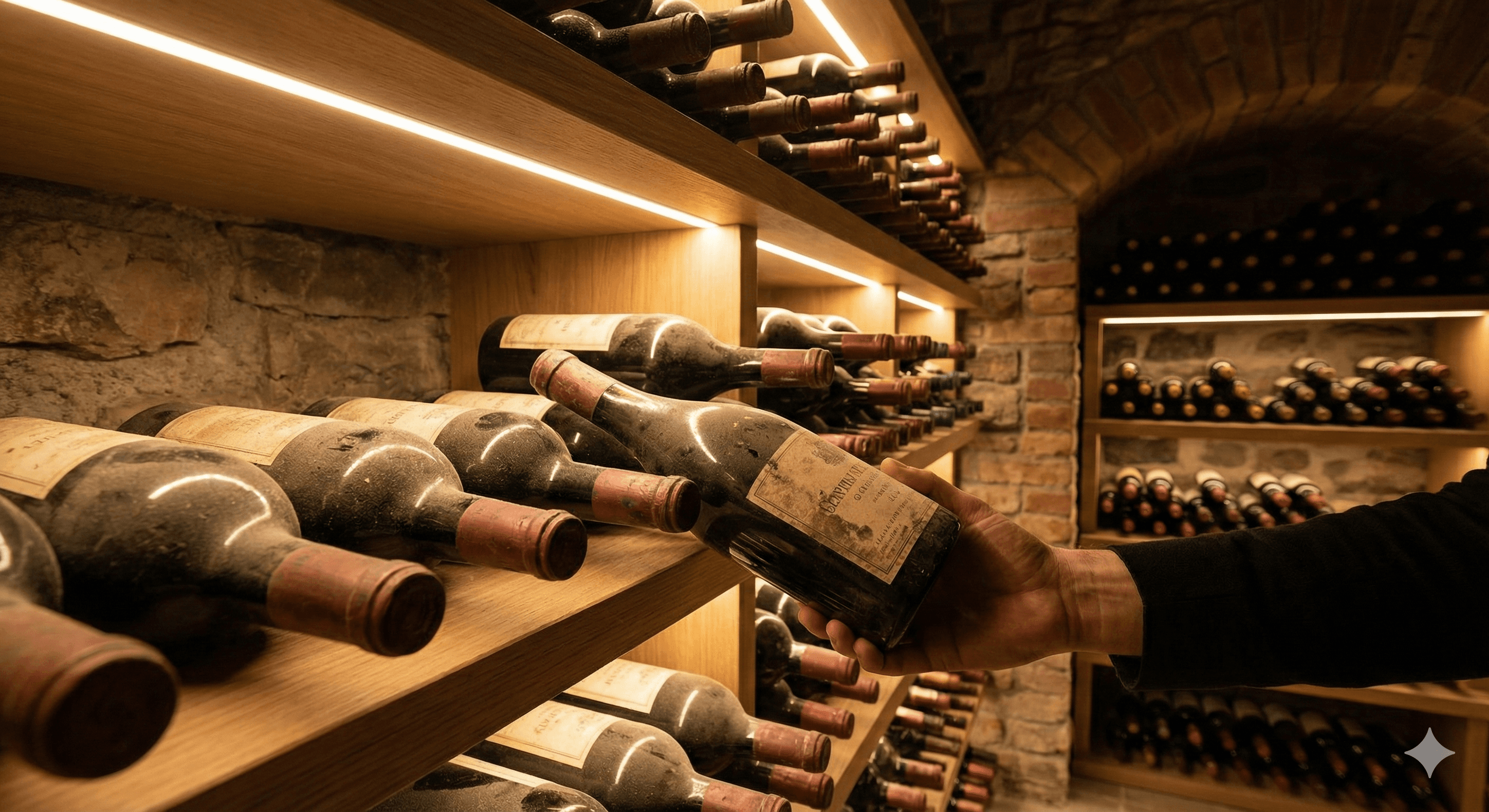
Store wine at home or in a wine cellar?The ultimate guide to temperature and humidity
Many of us have done it. Bought a fine bottle of Amarone or a vintage champagne with the thought: "I'll save this for a special occasion". Then it ends up in the kitchen cupboard above the fridge, or lying in the closet. But did you know that incorrect storage can kill the wine in just a year or so?
Storing wine is not just about hiding bottles away. It's about giving the wine a chance to mature, develop complex flavors and actually increase in value. But for that to happen, precision is required. Wine is a living product that is affected by its surroundings.
Here we go through the four critical factors for wine storage – and why it's so hard to get them right at home.
1. The temperature – Stability is key
The absolute most common mistake with home storage is the temperature. Many believe that room temperature (20–22 degrees) is okay for red wine. This is wrong. In that heat the wine ages too fast, the fruit dies and what remains is a flat, tired taste.
Golden rule
12–14°C
At home
The temperature fluctuates. Hot in summer, cold in winter. This causes the wine to expand and contract, which sucks in oxygen and oxidizes the wine prematurely.
The wine cellar
At Vinvalvet we keep a constant, cool temperature all year round. This allows the wine to rest dormant and develop at an extremely slow pace.
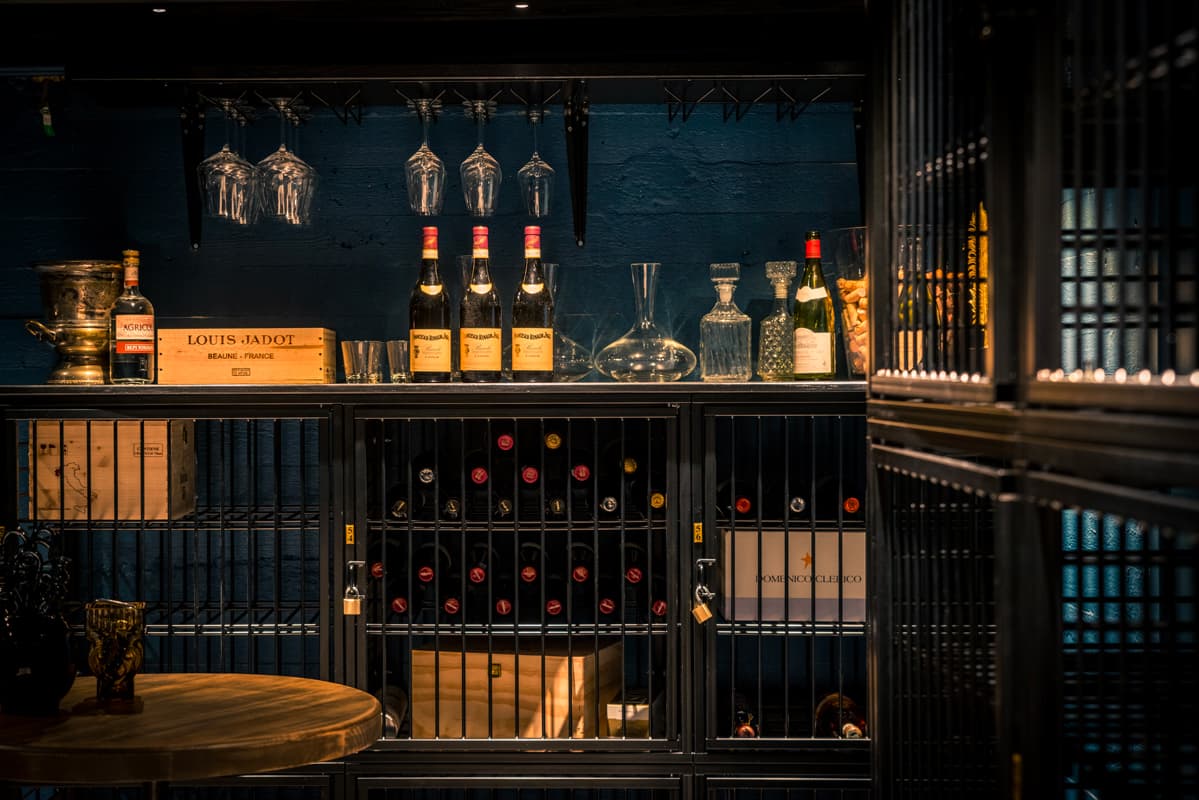
2. Humidity – The invisible enemy
This is the factor almost everyone forgets. A normal Swedish apartment, especially in winter, is dry as a desert (often below 30% humidity).
Why is it dangerous?
If the air is too dry, the wine cork starts to dry out from the outside. When the cork shrinks it lets air into the bottle, and presto your expensive Bordeaux has turned into expensive vinegar.
Too high humidity?
If the humidity goes over 80% there is no danger to the wine (the cork thrives!), but the labels can start to mold and fall off. Not nice if you intend to sell the bottle, but harmless to the contents.
In a professional wine cellar, humidity is monitored digitally to be exactly right.
3. Darkness
Have you ever thought about why wine bottles are often made of dark green or brown glass? It's sunglasses for the wine. UV light breaks down the organic compounds in the wine and quickly creates bad flavors (so-called "light damage").
Therefore, the wine rack in the kitchen is the worst place for your wines.
4. Stillness
Wine hates vibrations. A standard wine fridge at home has a compressor that hums and gently shakes the bottles every time it starts. Over time, these vibrations can disturb the sediment in the wine and negatively affect maturation.
Conclusion: Wine fridge, Closet or Wine locker?
The closet
- Cheap (free)
- Dark
- Uneven temperature
- Too dry
Wine fridge at home
- Controlled temp
- Looks nice
- Uses electricity & makes noise
- Often problems with humidity
External Wine locker
- Optimal temperature
- Perfect humidity
- Total stillness & darkness
- Insured & safe
The closet
Works for wines you will drink within 6 months. For longer storage it is too warm and dry.
Wine fridge at home
Good for "serving temperature" and storage for 1–3 years. But they use electricity, make noise, and cheaper models often have problems with humidity.
External Wine locker
The only option for serious long-term storage (5, 10, 20 years). Always optimal conditions.
Do you want to give your wines a better home?
At Vinvalvet in Gothenburg we offer an environment that is optimized down to the smallest detail. Here your wines lie safely behind thick walls and security doors.