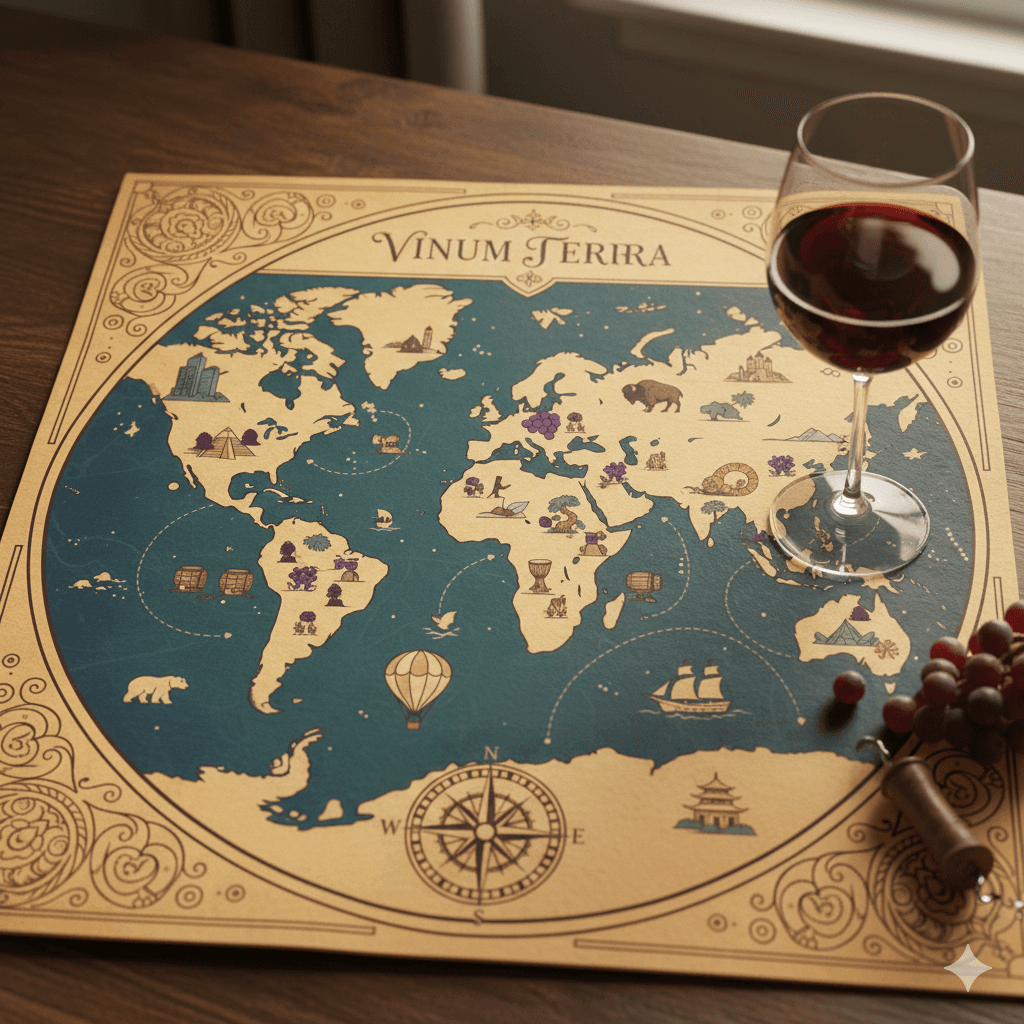
The great wine guideRegions, grapes and the art of understanding your taste
The wine world is as enormous as it is fascinating. For a beginner, it can feel like an impenetrable jungle of French village names, Italian classifications, and German predicates. But once you crack the code, a door opens to taste experiences that stay with you for a lifetime.
Understanding wine isn't about memorizing vintages. It's about understanding the impact of geography and climate on the grape – what the French call
In this comprehensive guide, we take you through the world's most important wine regions, the grapes that define them, and what to look for to find your favorites (and future investments).
1. France – The wine world's benchmark
France is the reference point for almost all wine production in the world. Here the region is more important than the grape on the label, and laws govern exactly what can be grown where.
Bordeaux (The king of aging)
Here, along the Gironde river, the world's most sought-after red wines are produced. Almost all wine here is a blend.
- Left Bank (Médoc, Graves): Dominated by Cabernet Sauvignon. The wines are astringent, powerful and often need 10–20 years to soften. Think blackcurrant, cedar, graphite and cigar box.
- Right Bank (Saint-Émilion, Pomerol): Dominated by Merlot. These wines are softer, fruitier and more accessible when young, but with enormous aging potential.
- White & Sweet: Don't forget the white wines made from Sauvignon Blanc/Sémillon and the world-famous sweet wine from Sauternes.
Burgundy (The Holy Land)
If Bordeaux is about châteaux and brands, Burgundy is about terroir. Here the vineyards are divided into small plots.
- Red (Pinot Noir): The world's most elegant red wines. Light in color but intense in aroma. Notes of strawberries, cherries, forest floor and spices.
- White (Chardonnay): From steely crisp Chablis in the north to the fat, buttery and oak-aged wines from Meursault and Montrachet.
- The Hierarchy: Learn the words Village, Premier Cru and Grand Cru. They indicate the quality and location of the vineyard.
Rhône (Power and spice)
The valley is divided into north and south.
- Northern Rhône: The grape is Syrah. The wines are dark, peppery and meaty (notes of smoked charcuterie and blackberries).
- Southern Rhône (e.g. Châteauneuf-du-Pape): It's warmer here. The base is often Grenache, blended with Syrah and Mourvèdre (GSM blend). Warm, high-alcohol fruit and herbs.
Champagne (Home of the bubbles)
Only sparkling wine from this region can be called Champagne. The cold chalk soil yields wines with extremely high acidity and minerality, making them perfect for aging. A vintage champagne develops notes of toast, nuts and honey after 10 years in the cellar.
2. Italy – Tradition and chaos
Italy has the most local grape varieties in the world. It is a country where food and wine are inseparable.
Piedmont (The fog and the truffle)
In northwestern Italy, the Nebbiolo grape reigns supreme.
- Barolo & Barbaresco: Often called "Italy's king and queen". The wines are deceptively light (almost look like juice) but have massive tannins and high acidity. Smells of tar, roses, rosehip and licorice. These wines require aging or rich food to be tamed.
- The everyday wines: Barbera (high acidity, no astringency) and Dolcetto are drunk while waiting for the Barolo to mature.
Tuscany (Sangiovese country)
Between Florence and Siena grows the Sangiovese grape.
- Chianti Classico: Sour cherries, tomato plant and herbs. Perfect for pasta.
- Brunello di Montalcino: A more powerful, more age-worthy clone of Sangiovese. Darker, deeper and more complex.
- Super Tuscans: In the 70s, rebels broke the rules and planted French grapes (Cabernet/Merlot) in Tuscany. The result (e.g. Sassicaia and Ornellaia) became iconic wines that today fetch sky-high prices.
Veneto (Amarone)
In the northeast, the immensely popular Amarone is made. By drying the grapes before pressing (the Appassimento method), you get a wine with high alcohol, some sweetness and flavors of raisins and chocolate.
3. Spain – Oak and vanilla
Spain often offers fantastic value for money, especially if you like aged wines.
Rioja
Here aging in oak barrels is a religion. The grape is mostly Tempranillo.
- Crianza: Aged at least 2 years. Fruity and fresh.
- Reserva: Aged at least 3 years. Balance between fruit and oak.
- Gran Reserva: Aged at least 5 years (often much longer). Here you find notes of dill, vanilla, leather and dried fruit. Ready to drink right upon release.
Ribera del Duero
Located at high altitude with cold nights. Same grape as Rioja (Tempranillo), but the style is more powerful, darker and more modern. Less vanilla, more dark fruit.
4. Germany – The white elegance
Forget Liebfraumilch. Today, Germany produces some of the world's premier white wines, especially from the Riesling grape.
The Style
Everything from bone dry (Trocken) to honey sweet. Riesling has a "razor sharp" acidity that allows the wines to age for 50 years or more.
Character
Lime, green apples, flowers and with age a fascinating note of petroleum (which is loved by enthusiasts).
5. New World – Fruit and technology
The "New World" (USA, Australia, South Africa, South America, New Zealand) generally has warmer and more stable climates than Europe.
What is the difference in the glass?
Old World (Europe)
Emphasizes terroir, acidity, structure and elegance. Often lower alcohol content.
New World
Emphasizes the fruit. The sun provides riper grapes which leads to higher sugar content → higher alcohol and fuller body. Often more obvious use of new oak barrels.
Examples of comparisons:
- Pinot Noir: A red Burgundy tastes of cranberries, mushrooms and minerals. A Pinot Noir from California (Russian River) often tastes of ripe strawberries, cherry jam and cola.
- Sauvignon Blanc: A Sancerre (France) is austere, mineral and "lemony". A Sauvignon Blanc from New Zealand explodes with passion fruit, gooseberry and nettles.
What makes a wine ageable?
Why does a bottle of Bordeaux get better after 20 years, while a box of Rosé becomes undrinkable after 2 years? For a wine to develop positively, it requires a "backbone" of something that preserves it.
(Important for white wines and Champagne). Keeps the wine fresh.
(The astringency in red wine). Acts as antioxidants. Melts together over time.
(For dessert wines). Sugar is a natural preservative.
(In e.g. Port wine).
If a wine lacks these components, it will only oxidize and lose flavor. If it has them, it needs a stable environment for the process to happen slowly and in a controlled manner.
Do you want to explore your own taste?
The best way to learn is to taste. In our tastings at Vinvalvet, we often pit regions against each other. What do you prefer – the power of a Napa Cabernet or the elegance of a Bordeaux?
With us, you don't just get to taste the difference, you also get the opportunity to store your favorites under perfect conditions in the middle of Gothenburg.